
← 返回目录 视觉先祖
1919–1933 年,影响广泛延续。
包豪斯 Bauhaus
包豪斯把艺术、工艺、建筑与工业通过功能结构、几何清晰与材料实验整合起来,这一点在当下仍可被识别。
真实参考
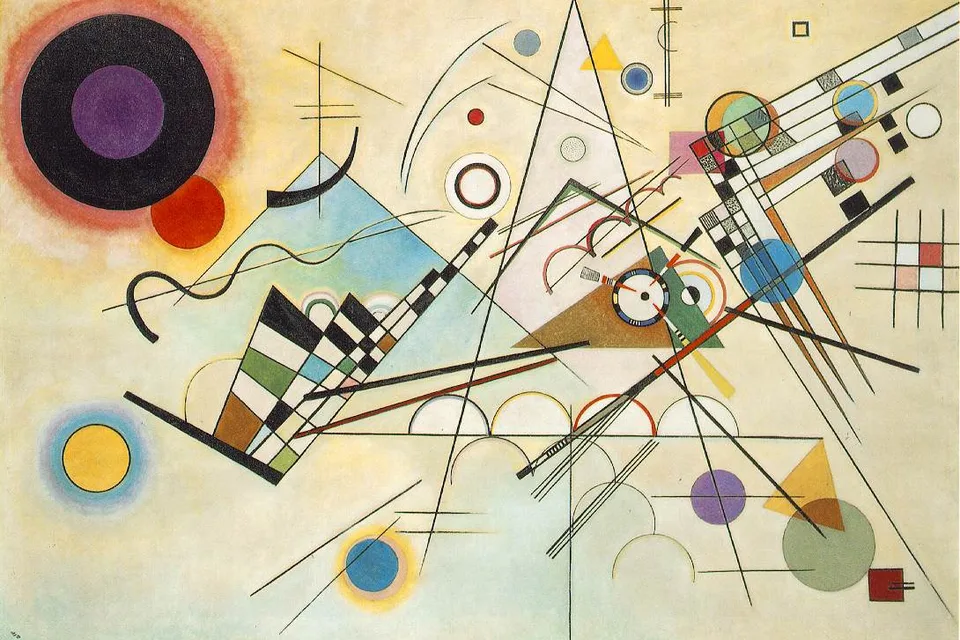
来源与版权:Public domain
统一场景实验
认识这种风格
包豪斯通过工作坊实验与功能设计,把艺术、工艺、建筑、表演与工业生产结合起来。它的视觉遗产包括不对称的网格、几何还原、现代字体与诚实的材料体系,但这些手段服务于用途与构造,而非单纯的装饰。该学校 1919–1933 年在德国运营,而后借流散深刻塑造 20 世纪设计。
起源
视觉签名
- asymmetrical geometric organization
- functional reduction
- integration of type, image, and manufactured form
把这种风格用起来
Use the attached image as the source. Preserve its original subject, composition, and aspect ratio as much as possible.

Apply this visual style: Reduce the source into a functional Bauhaus system of circles, rectangles, bars, arrows, and disciplined asymmetrical grid relationships while retaining readability. Use red, yellow, blue, black, and warm white as flat functional planes with even light and hard geometric shadows. Add modular alignment, workshop diagrams, universal type, primary-color blocking, lithographic ink, paper, painted steel, glass, and clean photomontage edges.

Avoid: decorative nostalgia, faux-aged paper, or assuming every geometric poster is specifically Bauhaus.
更多资料
编辑判断 · 更新于 2026-06-12
调色板
关键词
文化关联
音乐
- Bauhaus stage experiments
- modernist composition
- electronic minimalism
媒介
- architecture
- poster
- furniture
技术
- steel tubing
- photomontage
- industrial fabrication
事件
- Bauhaus founded in Weimar
- school closures and international diaspora
常见失败模式
- 没有功能层级与材料目的的几何,会沦为通用的现代主义装饰。
关联风格
风格制作拆解
避免:Avoid decorative nostalgia, faux-aged paper, or assuming every geometric poster is specifically Bauhaus.
01
主体与环境
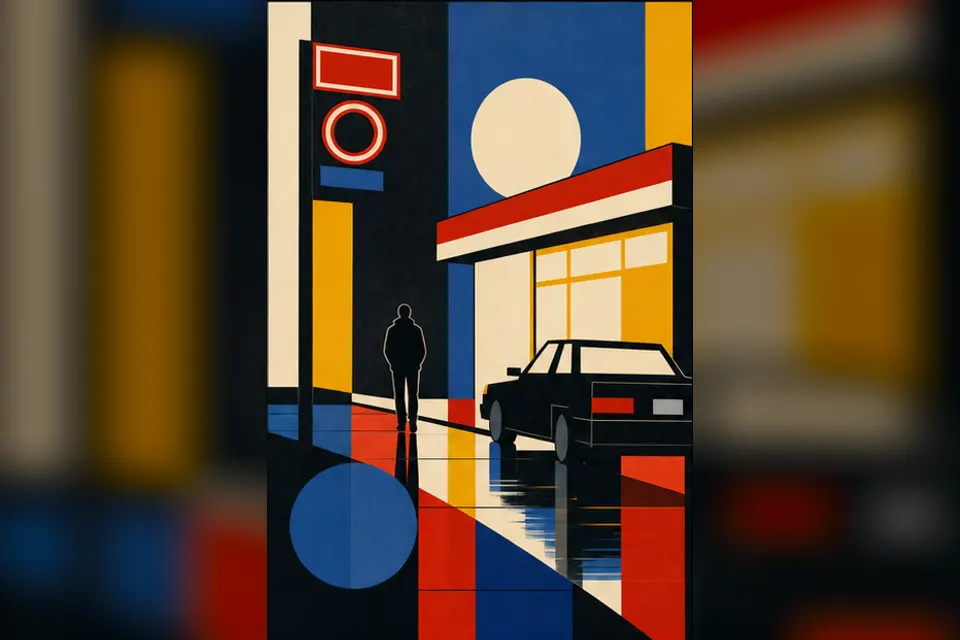
A functional urban convenience store diagrammed as an integrated system of architecture, transport, and human scale.
02
构图与视角
Reduce storefront, figure, and car to circles, rectangles, bars, and a strong asymmetrical grid with disciplined negative space.
03
调色板与光影
Organize red, yellow, blue, black, and warm white as flat functional planes with even light and a few hard geometric shadows.
04
媒介与材质
Combine lithographic ink, painted steel, glass, paper, and photomontage with clean workshop-made edges and visible material purpose.
05
风格标志物
circles, bars, arrows, workshop diagrams, universal type, and primary-color planes
06
后期与效果
Use modular grids, primary-color blocking, arrows, circles, and sans-serif alignment to explain structure instead of adding ornamental pattern.
制作手记
构图原则
Reduce storefront, figure, and car to circles, rectangles, bars, and a strong asymmetrical grid with disciplined negative space.
材质
- flat lithographic ink
- painted steel
- photomontage
光线
- functional even light
- hard geometric shadow
效果
- primary-color blocking
- modular grid
- sans-serif typographic alignment